01
Four regions create a clear way into the system
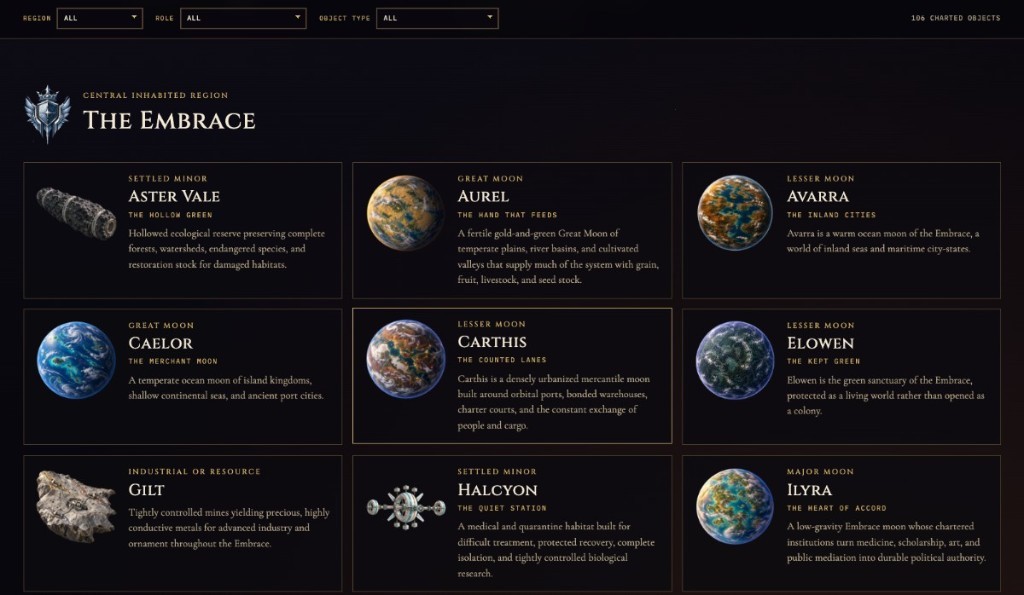
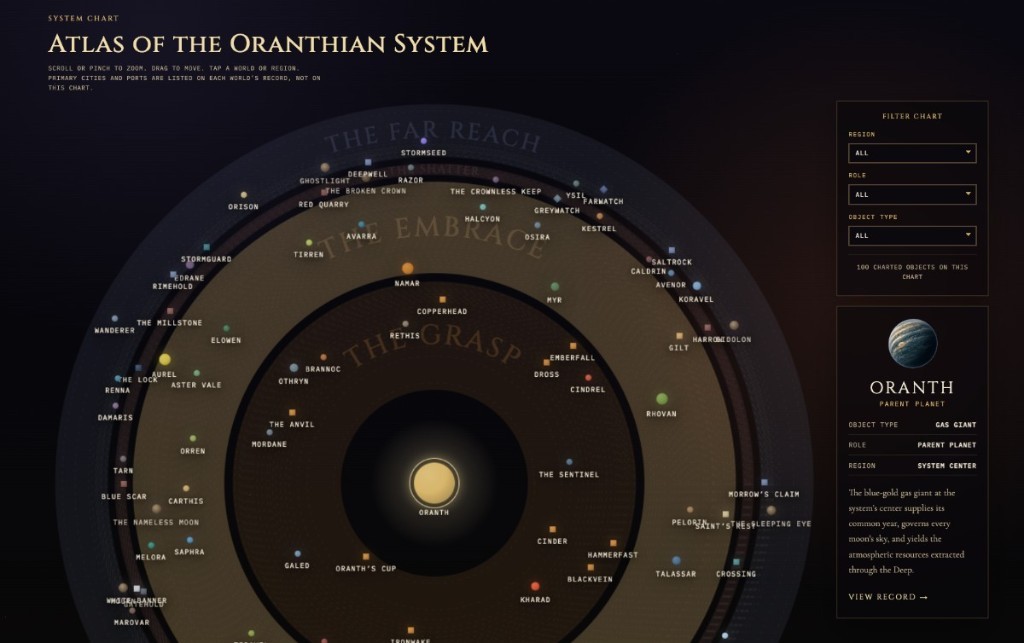
The Grasp, the Embrace, the Shatter, and the Far Reach give the archive a geographic framework. Visitors can begin with a region and explore the worlds and other records associated with it.

Interactive worldbuilding archive
Oranthian turns a sprawling science-fantasy setting into a navigable digital atlas. Visitors can move from the system’s regions to its worlds, locations, factions, events, stories, and documents, with each part of the archive contributing to a larger picture of life around Oranth.
Visit Oranthian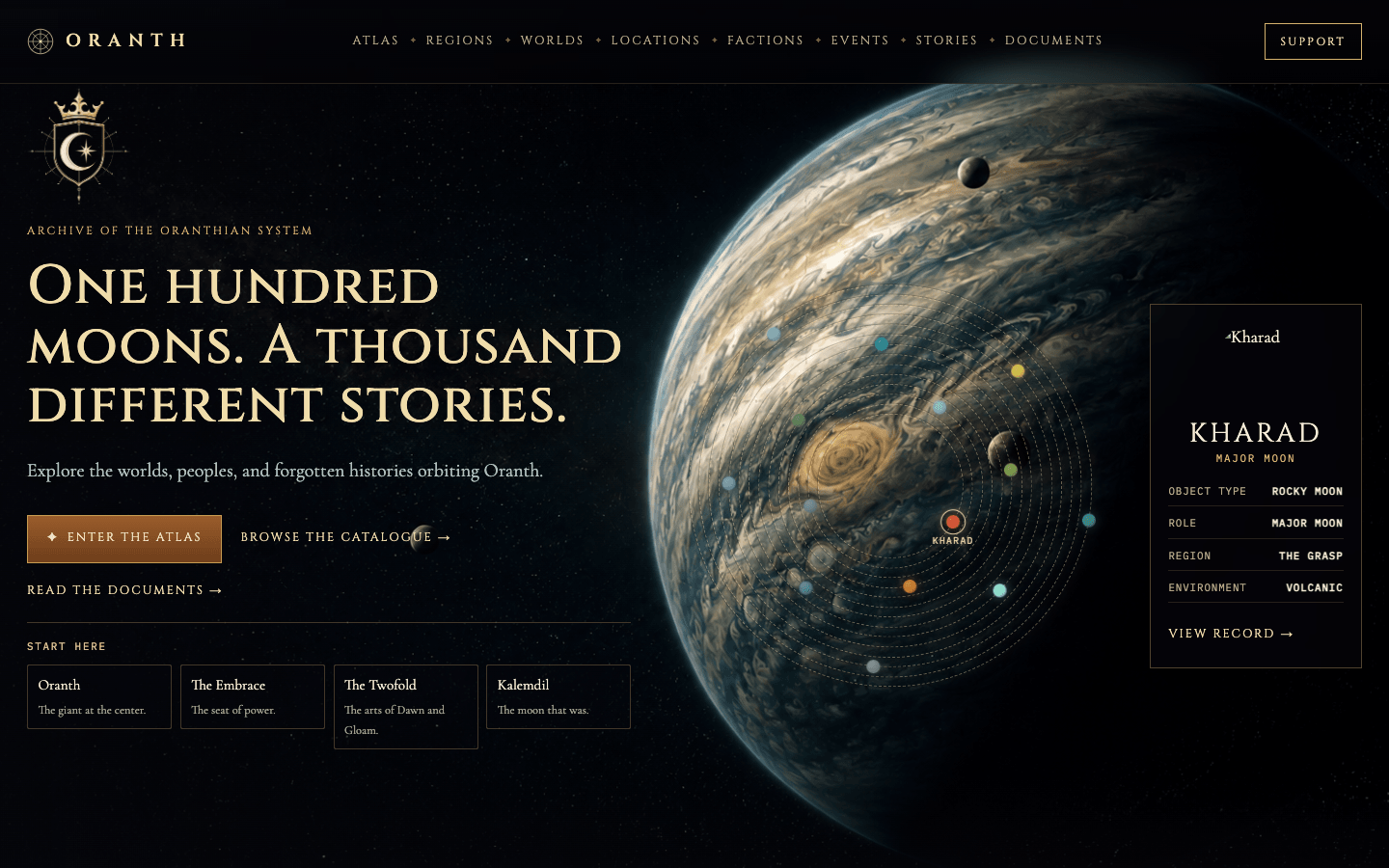
The challenge
Oranth is more than a collection of planets and places. Its setting includes distinct orbital regions, inhabited worlds, settlements, political powers, historical events, and shared documents that establish the system’s history and rules.
As the universe grew, its information needed a structure that could support both quick exploration and deeper reference. The experience also needed a way to check new material against established canon and catch continuity conflicts before they spread.
The response
Oranthian gives visitors several ways into the setting. They can begin with the system’s regions, browse its worlds, or follow a particular place, faction, event, story, or document. Each record has a consistent structure, while its content reflects what makes that subject distinct. A connected AI canon agent checks new material against established setting details and points out possible canon drift, helping keep the archive coherent as it expands.
Explore the four regions of the Oranthian system and understand how its inhabited and unsettled areas are organized.
Browse worlds and their physical, orbital, cultural, and political context.
Move from worlds to locations and factions to see how people, institutions, and places connect.
Use the canon agent to compare new material with existing records and flag details that may conflict.
The product
Oranthian brings the system’s geography, lore, and reference material into one connected experience.
01
The Grasp, the Embrace, the Shatter, and the Far Reach give the archive a geographic framework. Visitors can begin with a region and explore the worlds and other records associated with it.
02
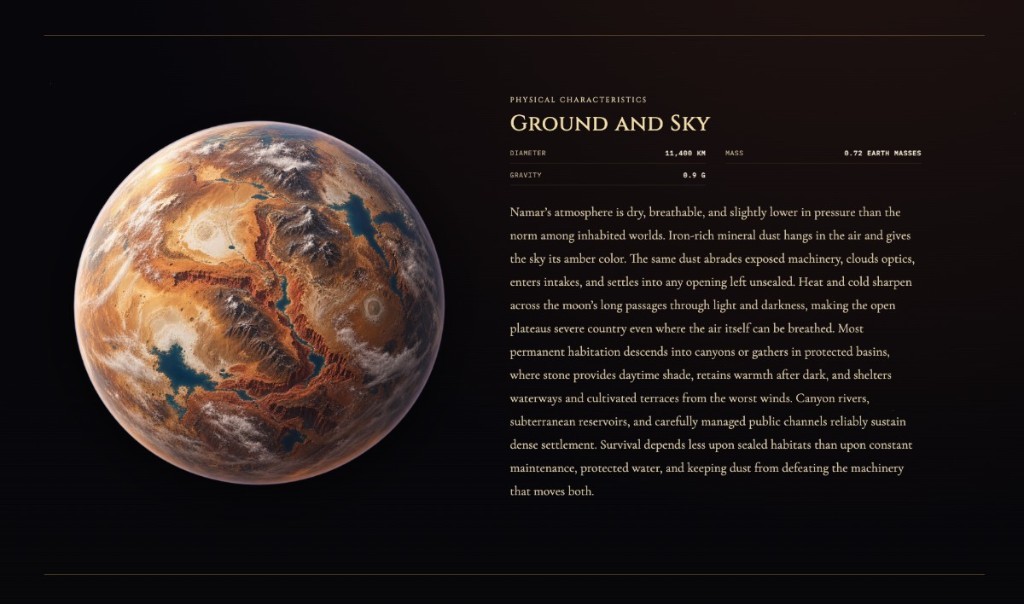
World pages bring together the details that make each place distinct, including physical and orbital information, culture, travel, and political context. A consistent record structure helps visitors understand each world while preserving room for its own identity.
03
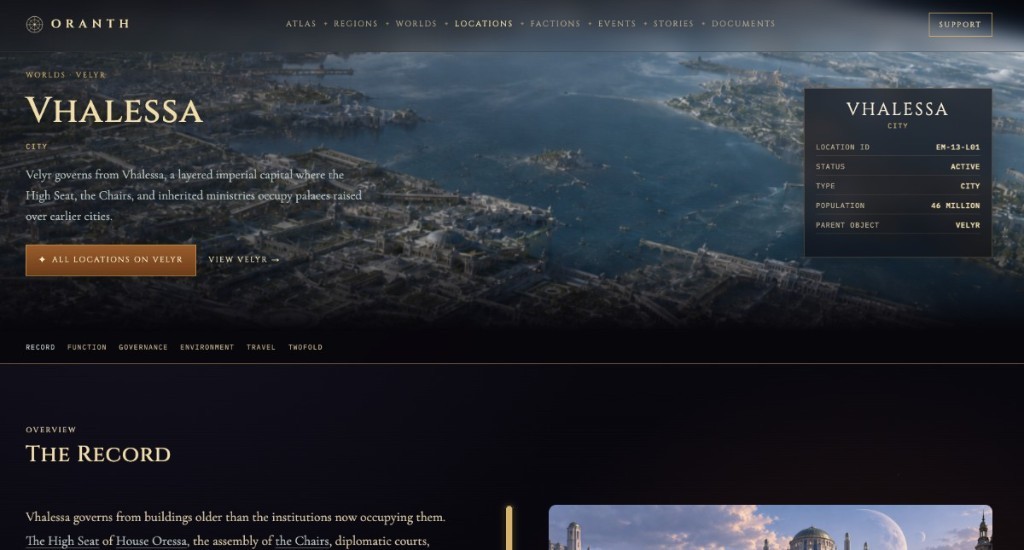
Cities, ports, routes, and other settlements make the setting tangible. Location records can describe what happens there, how people reach it, and how it relates to nearby worlds and institutions.
04
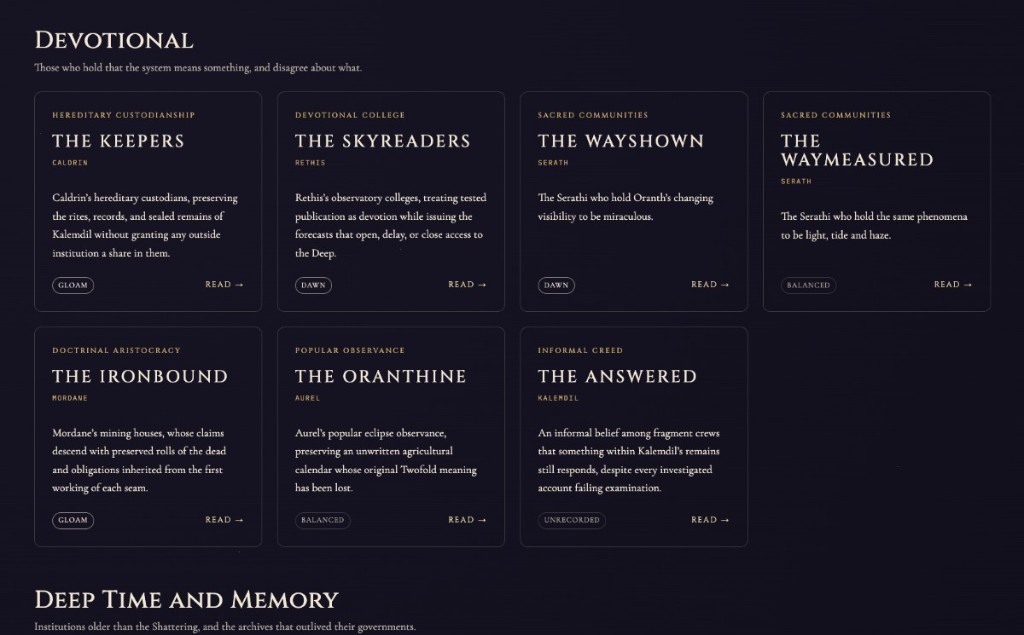
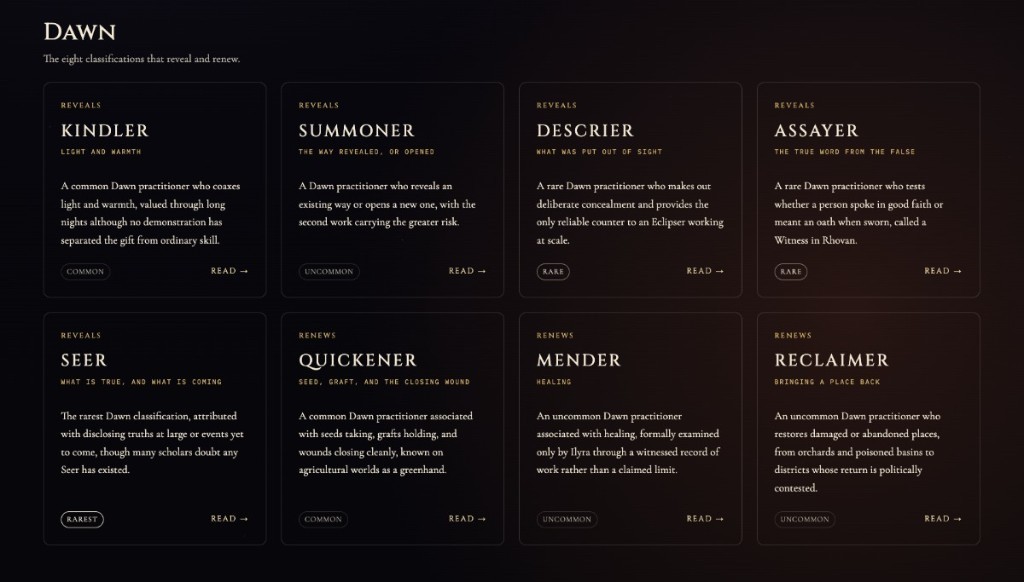
Factions show where authority, trade, and influence sit across the system. Events, stories, and reference documents add the history and agreements that shape how its people understand their world.
05
The connected canon agent checks new writing against established information in the archive. It identifies details that may conflict with existing records and points out possible canon drift, giving the creator a useful continuity check as the setting develops.
A growing archive
The public archive is supported by a structured content system, with WordPress managing the underlying records and Astro presenting them through the site. Reusable content structures keep the records consistent, while the canon agent helps check new material against what is already established. The live archive currently lists 106 worlds, 90 locations, 85 factions, 28 documents, and four regions.
Atlas
The atlas gives visitors a visual entry into Oranth’s regions and charted bodies before they move into individual records.
Worlds
World records are grouped by region so visitors can scan the catalogue and open the places that matter most to their exploration.
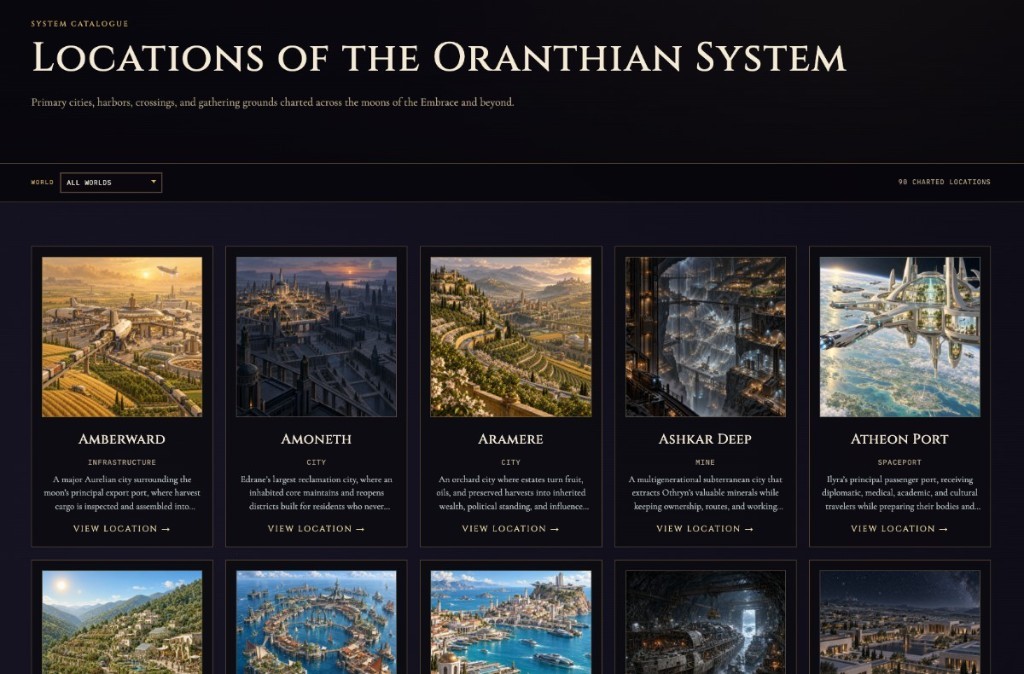
Locations
Cities, ports, and gathering grounds connect geography to daily life across the Great and Major Moons.
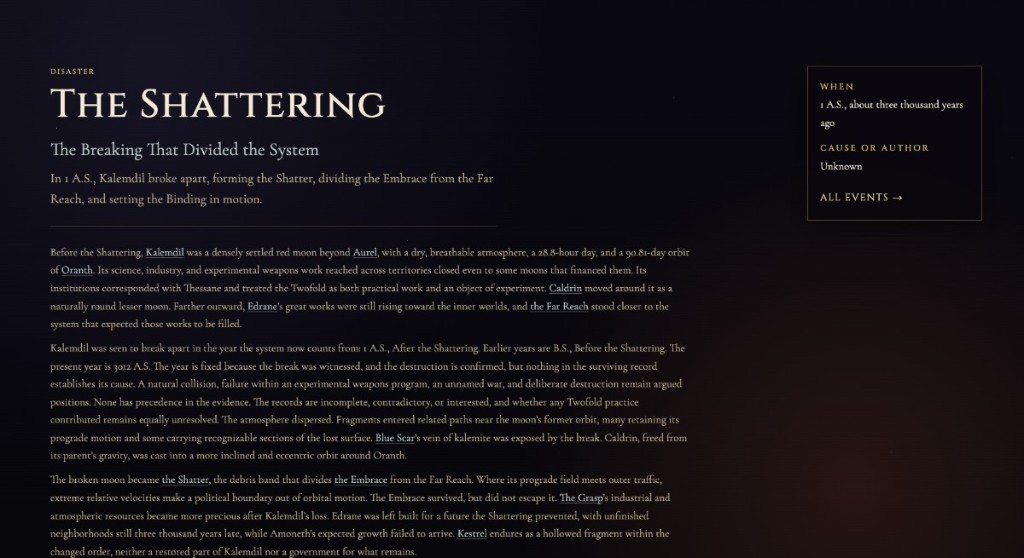
Events
Event records collect the disasters, agreements, and turning points that give the archive its shared historical frame.
The work
Oranthian was designed as an interconnected archive rather than a set of isolated lore pages. Its navigation, content model, reusable page layouts, and canon-checking workflow work together so the setting can grow without losing its internal relationships.
The four regions give visitors a practical starting point and help place individual worlds within the larger setting.
Worlds, locations, factions, and documents each need different information. Separate content structures allow every record to present relevant details in a consistent way.
The AI agent can compare new material against existing records and flag possible continuity issues while there is still time to address them.
Reusable templates and structured content allow new entries to join the system without requiring every page to be designed from scratch.
BUILT conceived, designed, developed, and launched Oranthian as a self-directed digital product. The work includes:
Oranthian brings a large, evolving fictional universe into a single public archive. Visitors can start with the map of the system, follow its worlds and factions, and move into the histories and documents that give those places meaning. Behind the archive, the canon agent helps identify continuity issues as new material is added.
Start a conversation
Share the users, the problem, and what the first useful version needs to accomplish. BUILT can help shape the product, define the system behind it, and take it from concept through launch and continued improvement.
A Pando company